18 Après-Ski Outfit Colors That Look Right Off the Slopes
18 Après-Ski Outfit Colors That Look Right Off the Slopes
Après-ski outfit colors are the fastest way to look like you belong on the mountain terrace, not like you just arrived from the airport. You do not need a new ski wardrobe or a big spend. When you pick the right color, a plain knit, old ski pants and the boots you already own can look like a planned outfit, and these Après-ski outfit colors prove it, one shade at a time.
The trick is not the price tag. It is the color. A single color can look flat or forgettable on its own, but against snow and warm wood it looks deliberate, calm and polished. That is why two women can wear the same plain puffer and one of them looks like she spent far more. The difference is rarely money. It is the color she chose.
This guide gives you eighteen colors that work in real life, from the sunny terrace to the lodge bar to dinner by the fire. Each one uses pieces you probably already own, or one small accent piece you can add without much spend. Pick the colors that match your closet, and let the rest wait for another trip.
How to Pick Colors That Work After Skiing
Snow changes every color you wear. It is the brightest backdrop there is, so pale colors can vanish into it and bright colors can look twice as strong. A soft cream that looks quiet at home can glow on a terrace, and a deep red that looks loud in a shop can look just right against white.
Let one color lead. Every good outfit has a main color that covers most of the look and a second color in a smaller amount. When two colors fight for attention in equal amounts, the outfit looks busy. When one leads and the other supports, it looks calm and planned. A camel coat with a cream knit is the classic example. The camel leads, the cream softens, and nothing competes.
Mind the fabric. Color looks richer in wool, ribbed knit, suede, faux fur and smooth leather than it does in thin shiny fabric. A burgundy knit in a soft rib reads expensive. The same burgundy in a thin shiny fabric reads cheap. You do not need costly fabric, just fabric with some texture and weight.
Mind the fit too. A good color falls flat when the pieces do not fit. A coat that pulls at the buttons, a sweater that bags at the waist, or trousers that pool at the ankle will undo the color work. Choose the size that sits cleanly on your shoulders and falls straight.
Think about lodge light. After skiing you spend your time in warm wood rooms, by firelight and candlelight, and those warm tones change how colors read. Cool colors can look flat in a dark lodge, while warm colors glow. If dinner is the plan, lean warm. If the terrace in bright sun is the plan, cool colors can shine.
Think about your skin tone before you buy anything new. Warm skin glows in camel, chocolate, olive, mustard and burgundy, while cool skin looks fresh in navy, charcoal, emerald, cobalt and icy blue. If you are unsure, hold the color near your face in daylight and watch what it does to your skin. A color that suits you makes your skin look bright and rested. A color that fights you makes you look tired, no matter how good it looks on paper. When a color does not suit your face, wear it lower down, in trousers, a skirt or boots, and keep a friendly color near your face.
The 18 Colors That Look Right
These eighteen colors cover every mountain mood, from quiet neutrals to rich jewel tones to bright pops that photograph beautifully against snow. Each one comes with a simple way to wear it, using pieces from a normal closet, so you can try one on your next trip without a shopping spree.
1. Cream
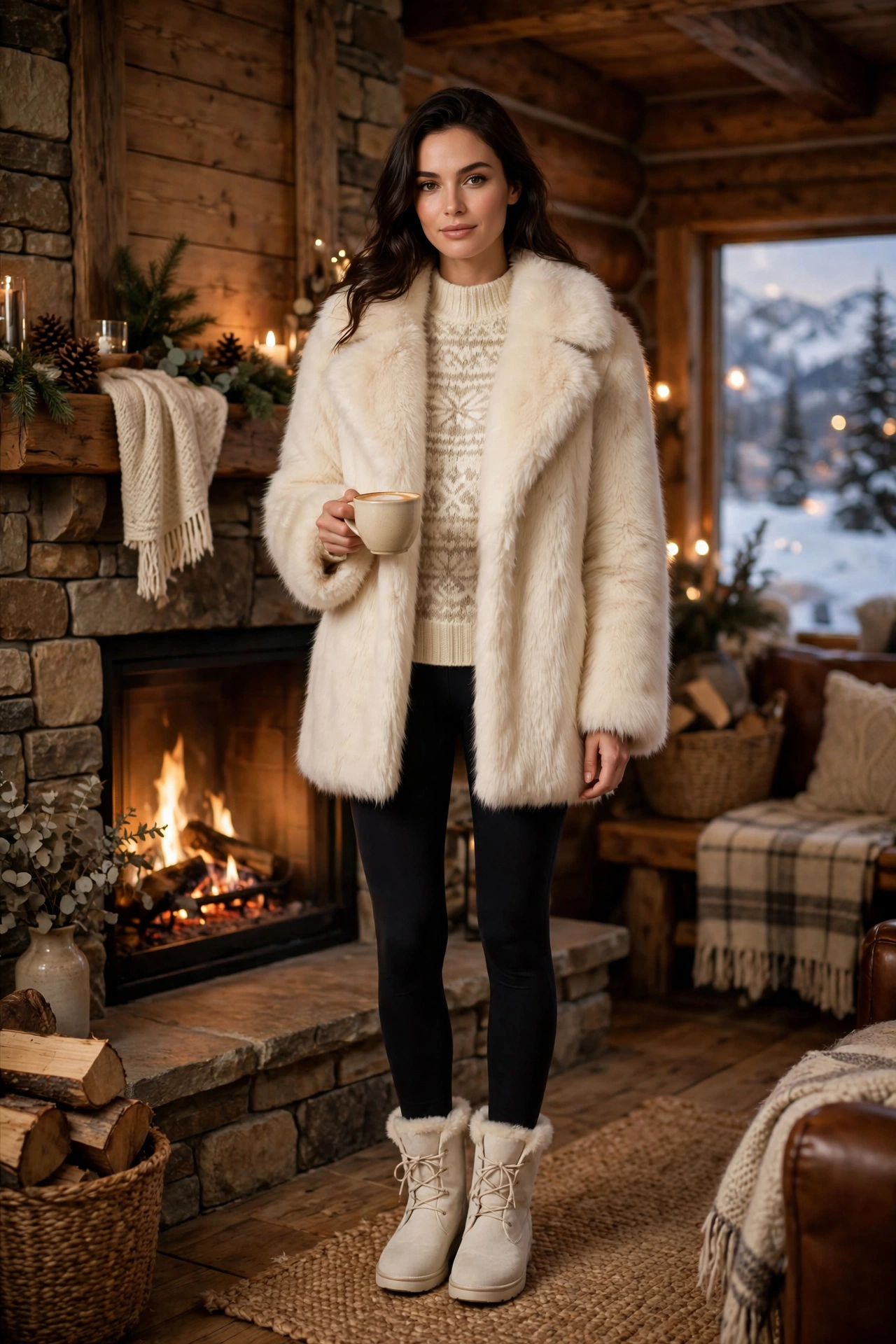
Cream is the color that looks expensive fastest after skiing. The softness of cream glows against snow and warm wood, and it makes every other piece in the outfit look richer. It suits every skin tone because it sits near the face and lifts it. Wear it with: a cream Fair Isle knit, black ski pants, cream socks and black snow boots.
2. Winter White
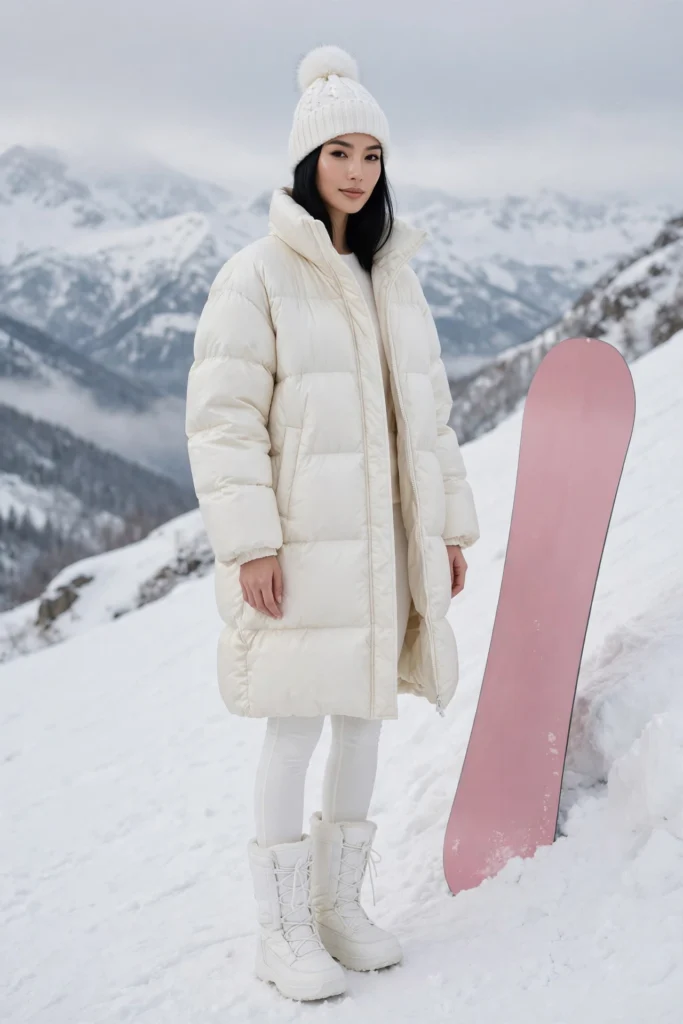
Winter white is cream taken one step further, and it is the boldest choice on a snowy terrace. An all white outfit looks fresh, clean and a little glamorous, and it photographs like a dream against a blue sky. It suits evenings at the lodge best, where snow and slush cannot reach it. Wear it with: a white cropped puffer, white ski pants, white snow boots and a cream knit beanie.
3. Camel
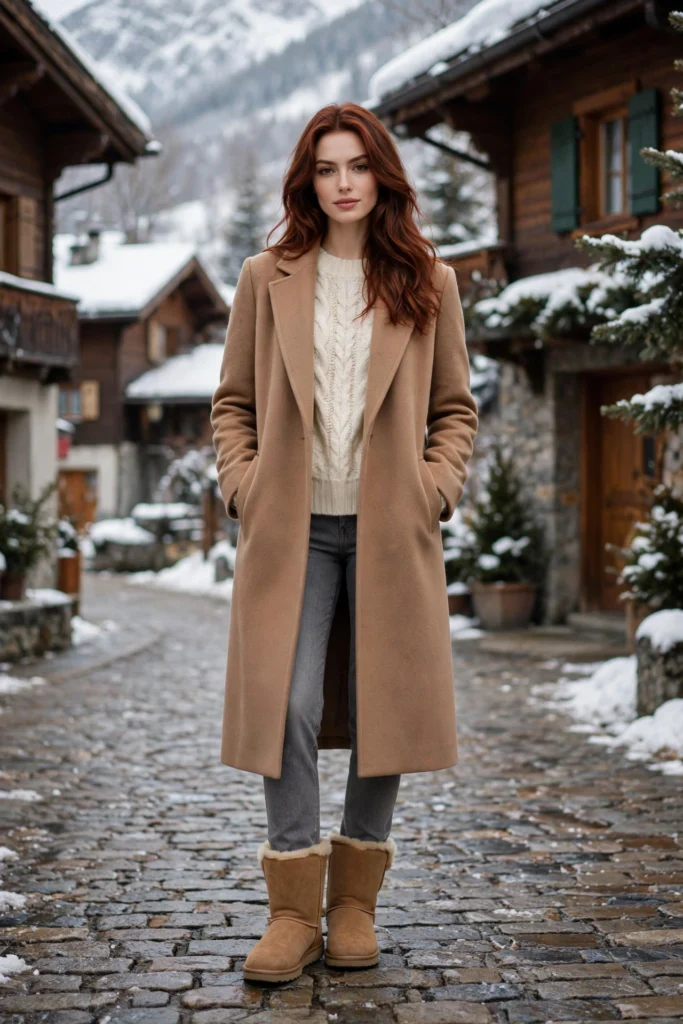
Camel is the warm neutral that makes everything else look planned. It grounds bright knits, softens dark trousers and looks rich in wool, suede and shearling. Wear it with: a camel teddy coat, a chocolate brown knit dress, dark brown tights and tall brown boots.
4. Chocolate Brown
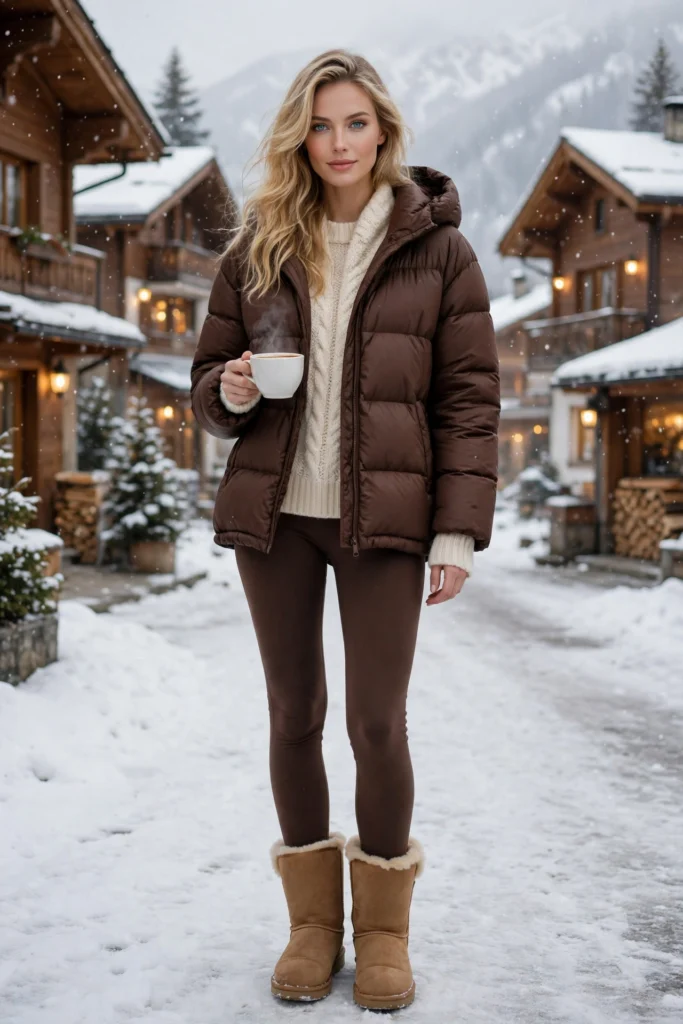
Chocolate brown is the warmest dark on this list, and one of the easiest to wear after skiing. The deep brown anchors the outfit and looks wonderful in wool, suede and smooth leather, and it hides snowmelt better than any pale color. It suits every skin tone. Wear it with: a chocolate brown coat, an ivory turtleneck, dark jeans and brown boots.
5. Black
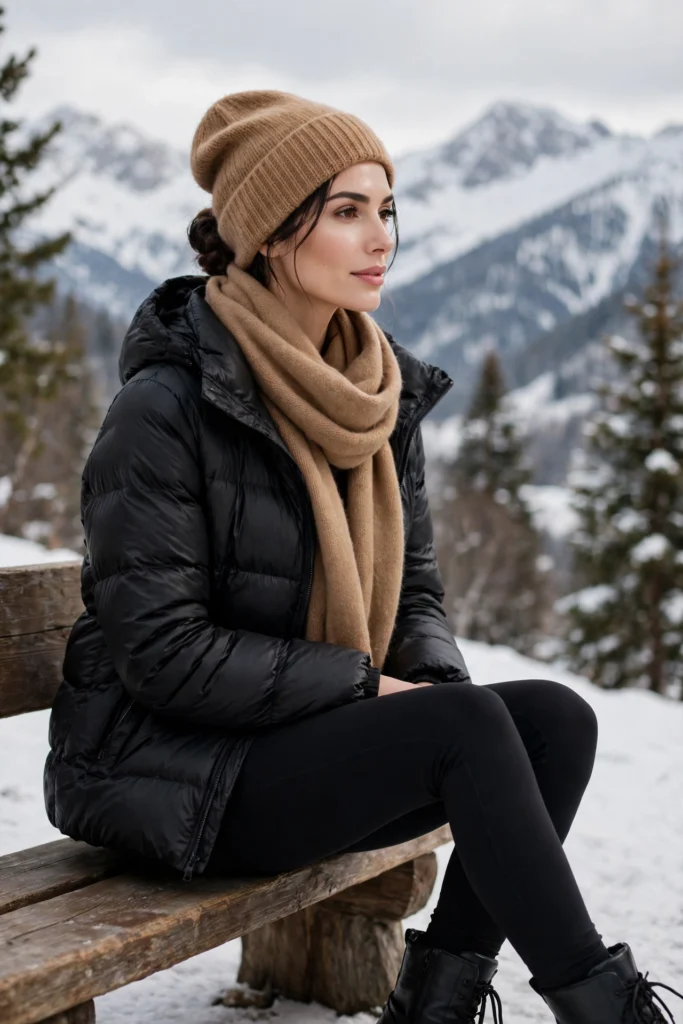
Black is the color that makes a ski wardrobe feel new again, and it is the easiest color to pack. It sharpens every other color you pair with it, and it looks sleek from the terrace to dinner. The trick is texture, so the black never reads flat. Wear it with: a black turtleneck, black ski pants, a black puffer and black lace up snow boots.
6. Charcoal Gray
Charcoal gray is the quietest dark on this list, and that is exactly why it looks expensive. The cool gray sharpens warm knits and softens bright accents, so the outfit reads balanced and intentional. It suits minimalists and anyone who wants polish without a bright color. Wear it with: a charcoal coat, a camel knit, charcoal trousers and black boots.
7. Navy
Navy is the dark that never looks heavy after skiing. It cools down warm knits, calms bright accents and looks polished in a puffer, a knit or a pair of ski pants. It suits lodge evenings and long travel days alike. Wear it with: a navy ski sweater, navy fleece lined leggings, white wool socks and navy snow boots.
8. Burgundy
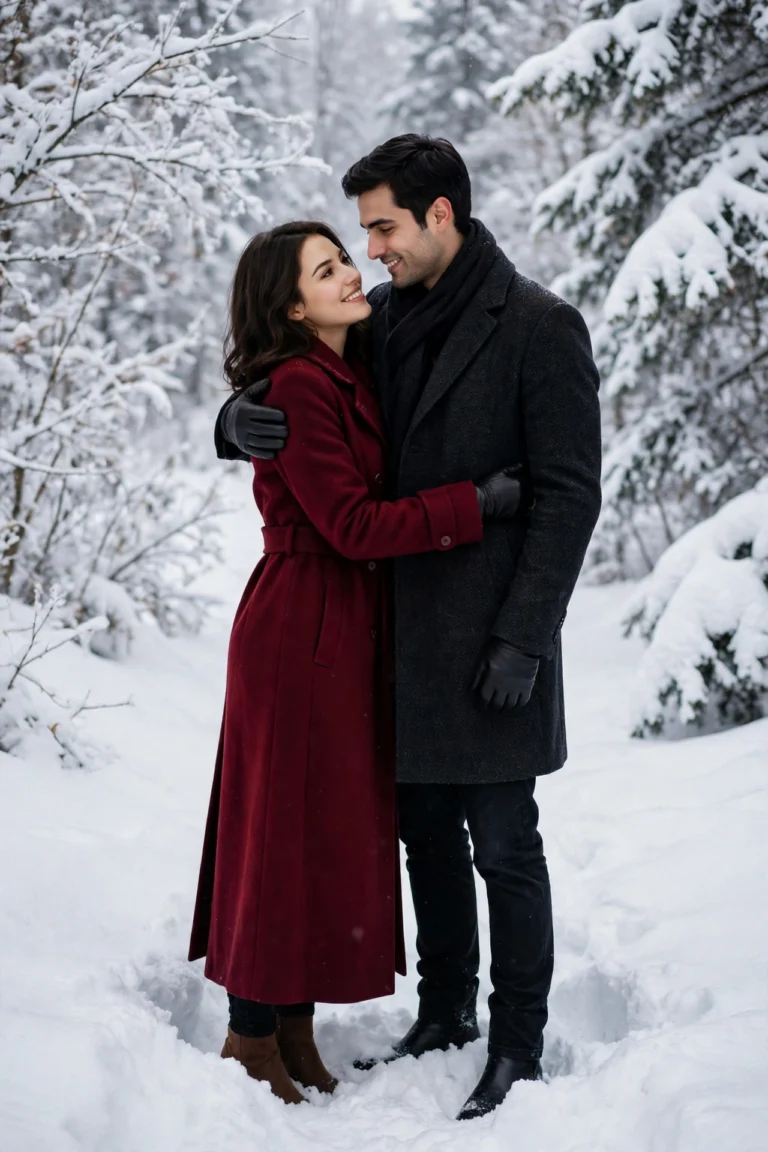
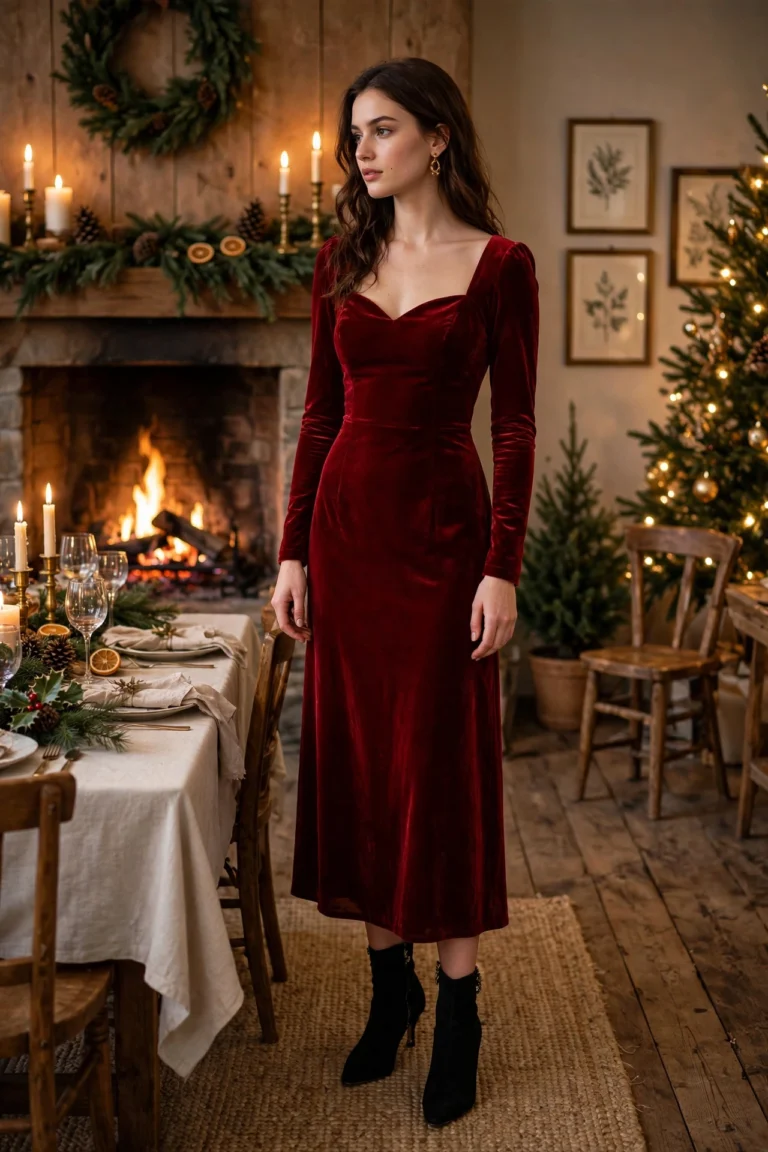
Burgundy is the rich dark that feels made for lodge evenings. It glows in firelight, flatters most skin tones and pairs beautifully with cream, camel, black and navy. It suits dinners, drinks and anyone who wants color without noise. Wear it with: a burgundy knit, cream wide leg trousers, burgundy boots and a navy coat.
9. Forest Green
Forest green is the deep color that feels like the mountains themselves. It brings depth to an outfit and looks wonderful in wool and suede, and it pairs easily with cream, camel and black. It suits weekends and anyone who likes color without noise. Wear it with: a forest green coat, a cream knit, dark jeans and brown boots.
10. Cherry Red
Cherry red is the brightest color on this list, and the one that photographs best against snow. A red knit or a red puffer glows in every photo, and a small red accent can lift a whole neutral outfit. It suits confident dressers and anyone who wants one bold note. Wear it with: a cherry red cable knit, white snow pants, white snow boots and red knit mittens.
11. Cobalt Blue
Cobalt blue is the cool bright that looks electric against white snow. It reads modern and a little sporty, and it works best as one strong piece against neutrals. It suits terrace afternoons and anyone who loves a bold color. Wear it with: a cobalt blue puffer, black leggings, white chunky snow boots and a black beanie.
12. Emerald
Emerald is a jewel tone that feels rich without shouting. The deep green brings life to an outfit and pairs beautifully with black, charcoal and cream, so the look reads luxurious but still wearable. It suits evenings and dinners. Wear it with: an emerald knit, charcoal trousers, black boots and a charcoal coat.
13. Deep Plum
Deep plum is a soft jewel tone that looks romantic without feeling sweet. The deep purple brings richness and pairs well with gray, cream and black, so the outfit feels polished and a little dreamy. It suits dinners and lodge evenings. Wear it with: a deep plum knit, gray trousers, black boots and a gray coat.
14. Olive
Olive is an earthy color that looks relaxed and thoughtful, never sloppy. The muted green feels natural and calm, and it keeps an outfit from looking dull or heavy. It suits weekends and anyone who likes a practical palette with a soft edge. Wear it with: an olive coat, a cream knit, dark jeans and brown boots.
15. Mustard
Mustard is the warm pop that turns one small piece into the whole outfit. The golden yellow glows against cool grays and dark neutrals, and it works best when it stays small. It suits anyone who wants color but only a little of it. Wear it with: a mustard scarf or knit, a charcoal coat, charcoal trousers and black boots.
16. Icy Blue
Icy blue is the palest cool color on this list, and the one that looks most at home in the mountains. It reads fresh and crisp, like the sky over snow, and it pairs beautifully with white, silver and navy. It suits terrace mornings and anyone who loves light colors. Wear it with: an icy blue jacket, white ski pants, white boots and a cream knit.
17. Blush Pink
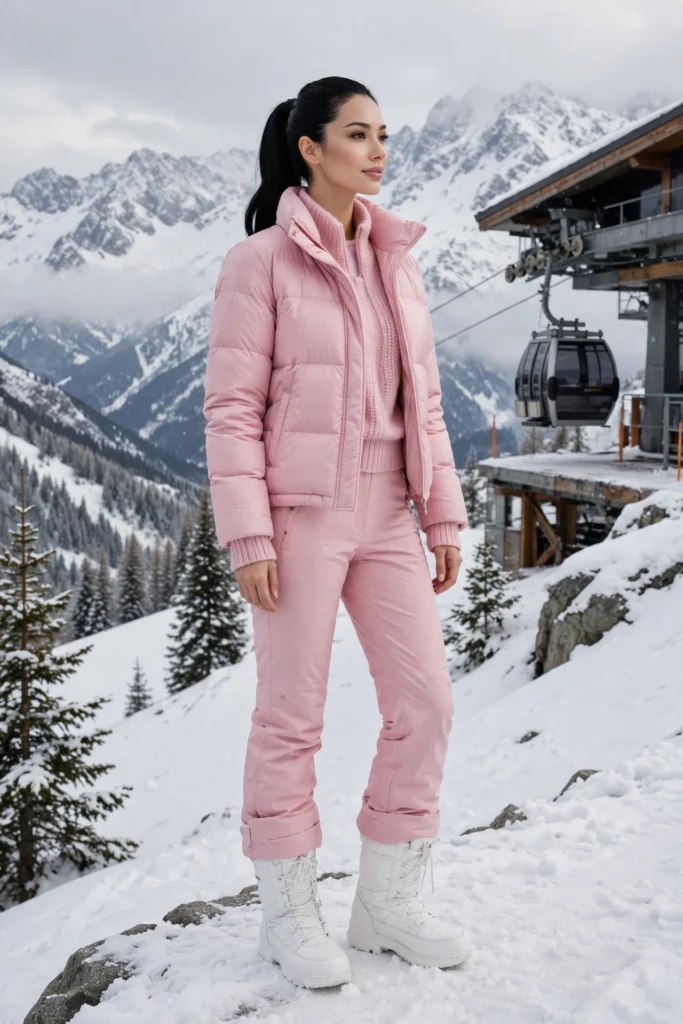
Blush pink is the soft color that warms up a snowy day. It looks gentle against white and pairs beautifully with cream, gray and black, so the outfit feels fresh without feeling sweet. It suits lodge mornings and anyone who wants a light note. Wear it with: a blush pink fleece jacket, white ski pants, cream boots and a cream beanie.
18. Silver
Silver is the metallic that reads like fresh snow itself. It adds shine to neutrals, lifts black and navy, and looks wonderful in a puffer, a beanie or a pair of boots. It suits evenings and anyone who wants a little sparkle. Wear it with: a silver puffer or beanie, a black knit, black ski pants and black boots.
Colors to Skip After Skiing
Most colors can work when the proportions are right, but a few habits make even good colors look cheap. Neon shades clash with the soft light of the mountains and can look harsh in photos, so save them for the slopes or skip them. A head to toe matching set in a thin shiny fabric can look like loungewear, even in a good color, so mix textures and break the set with a different fabric. All black without texture can look flat and tired, so add one warm accent or a textured knit to lift it. Pale pastels can vanish against snow, so if you love them, wear them near your face in the lodge rather than out on the terrace.
Make the Colors Work With What You Own
A good color should not ask you to buy a whole new wardrobe. Look at the eighteen colors above and count how many you can build today from pieces you already own. Most closets hold a black knit, a cream sweater, dark jeans and brown boots, and those four pieces alone cover half this list. Start there.
The cheapest way to try a new color is the accent piece. A scarf, a beanie, a pair of mittens or a knit in the new color costs far less than a coat, and it tells you in one wearing whether the color suits you. If you reach for it again the next day, the color has earned a bigger piece. If it sits in the drawer, you have lost little.
Share pieces across colors. A camel coat works with cream, burgundy, forest green, black and navy. A black knit works with cream, cobalt, cherry red and silver. A charcoal coat works with mustard, emerald, plum and camel. When one piece serves five colors, your closet works harder and your spend stays low. That is the whole secret of looking good after skiing: fewer pieces, better colors.
If your closet is missing a piece for a color you love, try secondhand first. Thrift stores, consignment shops and resale apps are full of wool coats, leather bags and fine knits in exactly the colors on this list, and a secondhand coat in camel or charcoal costs far less than a new one. Check the seams, the lining and the buttons before you buy, and look for fabric with weight and texture rather than a brand name. A good secondhand find in the right color looks just as good as a new piece, sometimes better, because the fabric has already softened into its shape.
Five Quick Tips for Color After Skiing
- Pick the color first, then build the outfit around it. When the color is decided, everything else gets easier.
- Keep one color in charge. A dominant color with a smaller second color looks planned. Two colors in equal amounts look busy.
- Add texture before you add color. A ribbed knit, a wool coat or a faux fur trim makes simple colors look rich, and texture costs nothing extra.
- Hold every new color near your face in daylight. If your skin looks bright and rested, the color works. If you look tired, move it away from your face and wear it lower down.
- Finish with warm boots and one good accessory. Dry feet and a structured bag or a good beanie pull a simple outfit together, and they are the cheapest finishing touches in the closet.
Frequently Asked Questions
Can I wear white after skiing?
Yes. Winter white is one of the best colors for the lodge and the terrace, because it looks fresh and photographs beautifully. Keep it for dry days and evenings, since white shows slush and dirt fast. A white puffer with white pants is the boldest look on the mountain, and a cream knit with dark trousers is the easy version.
What if my ski wardrobe is mostly black?
Start with black and camel. A camel coat or a camel scarf over black pieces changes the whole outfit without a big spend. Then add one accent color, like burgundy or cherry red, in a scarf or a beanie, and your black wardrobe starts to look like a planned collection.
Do I need to buy new pieces for these colors?
No. Most of the eighteen colors use pieces from a normal winter closet: a coat, a knit, dark jeans and boots. If you want to try a color you cannot build today, buy the accent piece first, a scarf or a beanie, and see how often you reach for it before you buy anything bigger.
Which color works best for photos in the snow?
Cherry red, cobalt blue and burgundy photograph best, because rich colors stand out against white. Cream and winter white look soft and expensive in golden light.
Final Thoughts
These eighteen colors all prove the same point. Looking good after skiing is not about the price tag. It is about the colors you pick, the textures you choose and the pieces you already own. Pick one color that matches your closet, wear it on your next trip, and notice how often you reach for it again. The best color is the one you already love wearing.